Legal Operations
Employment Law
Screen plaintiff and defense inquiries with deadline-aware intake, document collection, and strong case qualification filters. MHSB designs practice-specific Lawmatics workflows, automations, and reporting for employment law firms.
Need the right Lawmatics implementation path first?
We use practice-specific pages like this to show what changes by matter type. When you are ready to plan delivery, start with a strategy consultation or the audit-vs-build guide.
Book a Strategy Consultation
Review employment law workflows, intake priorities, and implementation constraints with MHSB.
Compare Audit vs Build
Choose whether your firm needs optimization, a rebuild, or a phased implementation plan.
How MHSB Works
See our audit, implementation, QA, training, and launch delivery process.
Lawmatics Implementation FAQ
Get answers on timelines, scope, support, and integrations.
Employment law practices operate on two fundamentally different sides, and most handle both. Plaintiff-side work involves screening large volumes of employee inquiries to find viable claims, collecting workplace documents, and meeting agency filing deadlines. Defense-side work involves responding to employer clients who need investigations, policy reviews, or litigation defense. A single Lawmatics configuration must serve both sides without mixing data or workflows, and it must account for the tight statutory deadlines that govern employment claims.
Plaintiff vs. defense intake separation
We configure separate intake paths based on whether the prospect is an employee or an employer. Employee-side intake captures the employer name, dates of employment, type of claim, whether an EEOC charge has been filed, and key adverse actions with dates. Employer-side intake captures the company name, number of employees, the nature of the issue, and whether litigation has been threatened or filed. Each path feeds into its own pipeline with appropriate stages. This separation ensures your team never accidentally applies plaintiff workflows to a defense matter, and conflict checks run properly across both sides, integrated with your client intake system.
Deadline tracking and case screening
Employment claims are governed by strict filing deadlines that vary by claim type and jurisdiction. An EEOC charge typically must be filed within 180 or 300 days of the adverse action. State agency deadlines differ. Statute of limitations for wage claims varies by state. We build date-calculation fields into intake forms that flag approaching deadlines automatically and alert your team when a viable claim is at risk of expiring. For plaintiff-side practices that receive high inquiry volume, we configure qualification scoring based on claim type, documentation strength, employer size, and damages potential. This scoring helps your team prioritize callbacks and decline low-value matters early.
Document collection for evidence-heavy matters
Employment cases depend on documentation: offer letters, employment agreements, performance reviews, disciplinary records, pay stubs, company policies, and electronic communications. We configure automated document request sequences that go out immediately after intake, tailored to the claim type. A wage and hour claim triggers requests for pay stubs, timekeeping records, and the employee handbook. A discrimination claim triggers requests for performance reviews, the complaint history, and relevant communications. Reminders follow up on missing items so your team spends less time chasing paperwork.
Typical workflows we configure
- Separate employee and employer intake forms with side-specific qualification questions
- EEOC and state agency filing deadline calculators with countdown alerts
- Claim-type qualification scoring for plaintiff-side case screening
- Automated document request sequences tailored to discrimination, wage, and contract claims
- Employer-side investigation task templates with witness interview scheduling
- Post-resolution follow-up for settlement documentation and client reviews
If your employment law practice needs intake that handles both sides efficiently, schedule a consultation to plan your configuration.
What This Looks Like in Lawmatics
These are the Lawmatics tools we configure for employment law implementations.
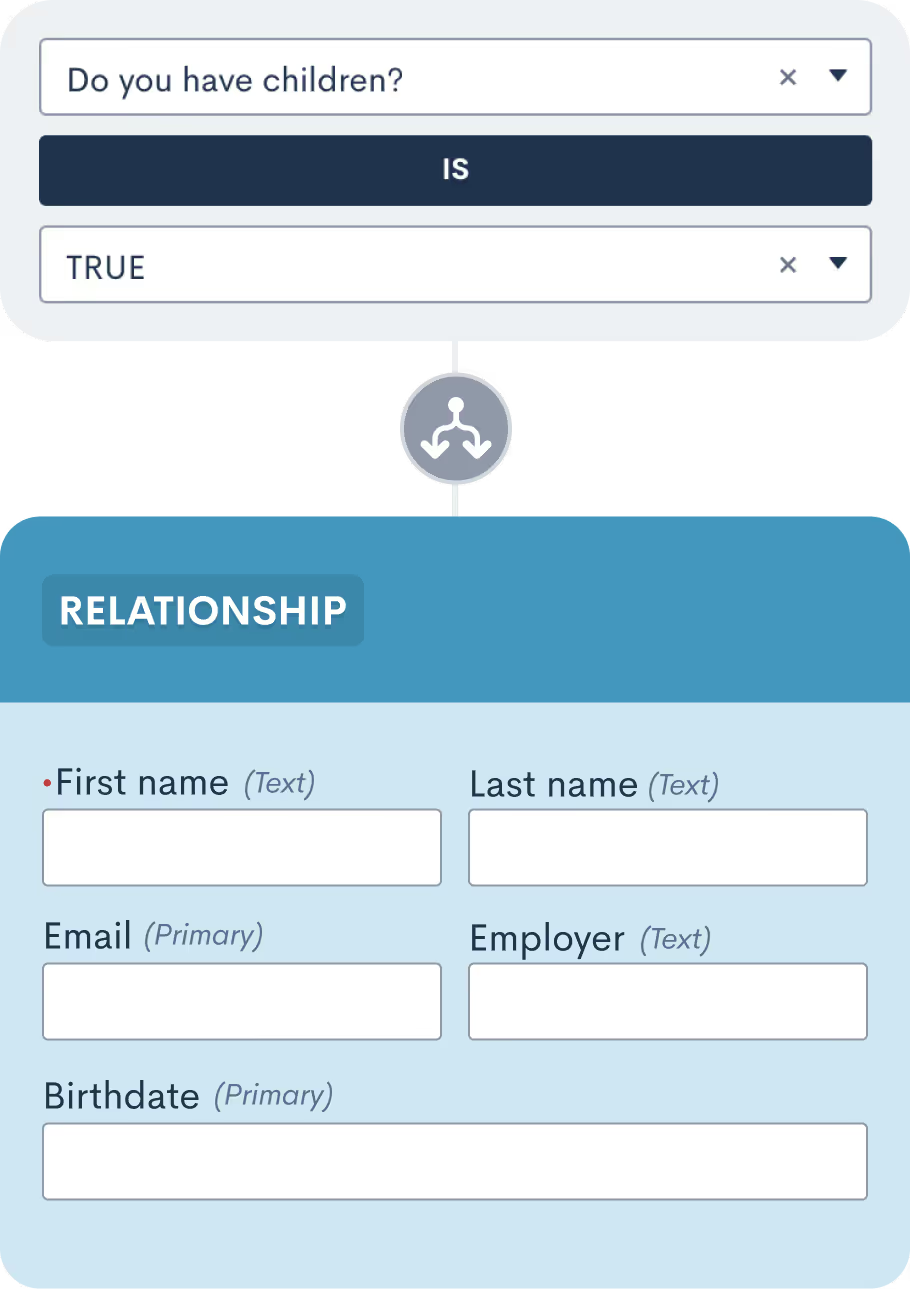
Conditional Intake Forms
Build forms that adapt based on claim type, wage disputes, discrimination, wrongful termination, collecting the right details upfront.
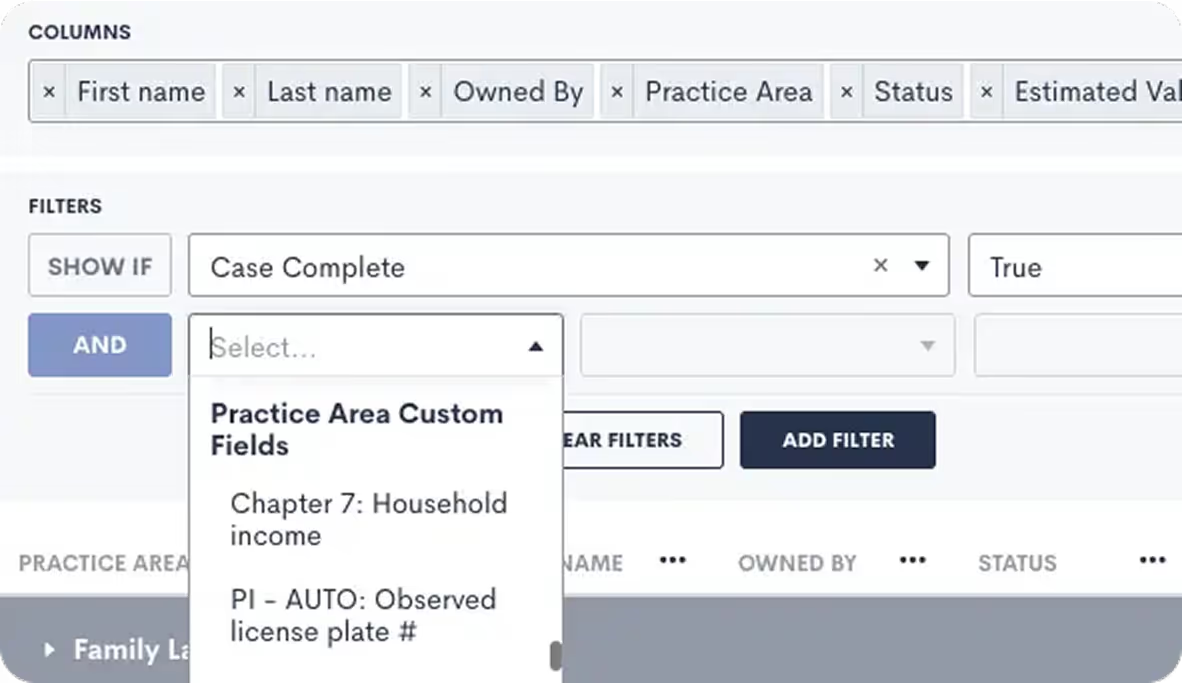
Practice Area Performance
See which employment matter types convert best and where marketing spend delivers the strongest ROI.
Key Outcomes for Employment Law
We align Lawmatics with the workflows and expectations of this practice area so your team can deliver a consistent client experience.
Dual intake paths for plaintiff-side employees and defense-side employers.
EEOC filing deadline and statute of limitations calculators built into intake.
Case screening qualification scoring to identify viable claims from high inquiry volume.
Automated document collection for employment agreements, pay records, and HR policies.
Communication logs with timestamp tracking for sensitive case correspondence.
Matter-type routing for discrimination, wage and hour, wrongful termination, and contract disputes.
Employer-side retainer and investigation workflow templates.
How We Implement Lawmatics for This Practice
Our implementation team focuses on the workflows that matter most to your practice, from first contact to post-matter follow-up.
Intake built for the matter type
Capture the right facts and documents with conditional logic and guided workflows.
Automations that keep cases moving
Trigger tasks, follow-ups, and reminders based on stage and urgency.
Visibility that supports growth
Track performance by practice area, source, and outcome with clear dashboards.
Next Step
Want a Practice-Specific Implementation?
Schedule a consultation to see how MHSB can tailor Lawmatics for your practice area.